Your Radon Cure Starts Here.

Schedule an Appointment

For over 20 years, we’ve helped families across the Four Corners region breathe easier through expert radon testing and mitigation. At Radon Rx, we treat every home like a patient — diagnosing the problem, prescribing the right solution, and ensuring lasting protection for the people you love most.

Stethoscope_Icon
Diagnosis

We start with a comprehensive radon test to assess your home’s current levels. Our testing provides fast, accurate results so you know exactly what’s happening in your home’s air.

Medicine_Icon
Treatment

No two homes are the same. We design and install mitigation systems tailored to your property, ensuring consistent airflow, discreet equipment placement, and long-term results.

Calendar_icon
Follow-up

We don’t just install and disappear. We follow up with post-mitigation testing to verify effectiveness and keep your home within safe EPA standards.

A stethoscope icon.
Diagnosis

We start with a comprehensive radon test to assess your home’s current levels. Our testing provides fast, accurate results so you know exactly what’s happening in your home’s air.

Medicine_icon
Treatment

No two homes are the same. We design and install mitigation systems tailored to your property, ensuring consistent airflow, discreet equipment placement, and long-term results.

Calendar Icon
Follow-up

We don’t just install and disappear. We follow up with post-mitigation testing to verify effectiveness and keep your home within safe EPA standards.

The Hidden Health Risk
Inside Your Home

Radon is an invisible, odorless gas that could be putting your family at risk without you even knowing it

The Silent Killer

Radon is the #1 cause of lung cancer among non-smokers — claiming over 21,000 lives each year. You can’t see it, smell it, or taste it, but it could be inside your home right now.

You Can’t Detect Radon Without Testing

This invisible, odorless gas gives no warning signs. The only way to know your air is safe is to test it.

Even Brand-New Homes Can Have Dangerous Radon Levels

Radon seeps up from the ground — not from your walls, paint, or age. It can affect any home, anywhere.

Radon Levels Change — Even When You Don’t

Humidity, air pressure, and weather can cause radon levels to spike overnight. If you haven’t tested recently, your home’s safety status could have changed.

Our Region Has Some of the Highest Radon Levels in America

The Four Corners area sits in an EPA Zone 1 — meaning high radon potential. Testing here isn’t optional; it’s necessary.

The Air Closest to the Floor Is the Most Dangerous

Radon collects in basements and lower floors where kids and pets play. Protect your loved ones from long-term exposure.

Tailored Treatment Plans

Every home gets a thorough examination, a clear diagnosis, and a treatment plan tailored to its unique structure and radon levels.

Schedule an Appointment
Sub-Membrane Depressurization System

A Sub-Membrane Depressurization (SMD) system is ideal for homes built over crawl spaces where radon enters through exposed soil or gravel.

VAPOR BARRIER

A vapor barrier is a sealed membrane that covers exposed soil in a crawl space, blocking moisture and soil gases from entering the home

A vapor barrier
RADON FAN

A radon fan creates constant suction to move radon gas away from the home before it can enter living spaces.

Close-up of a white radon vent pipe with black rubber couplings attached to a brick wall.
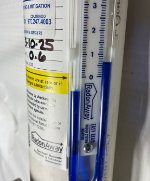
MANOMETER

A manometer is a simple gauge that indicates the radon system is operating correctly.

Close-up of a medical manometer showing pressure measurements with a blue column and measurement markings.
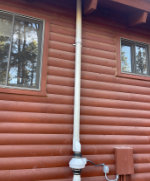
VENT STACK

The vent stack is the vertical pipe that carries radon gas from beneath the home and releases it safely above the roofline.

White vent pipe running vertically against a brown log cabin exterior with two windows.
Active Sub-Slab Depressurization

An Active Sub-Slab Depressurization (ASD) system is Ideal for homes with basements or concrete slabs, using suction beneath the slab.

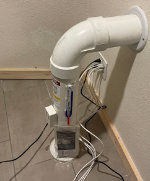
SUCTION POINT

The access point drilled through the slab where radon gas is collected from beneath the concrete.

White ventilation pipe connected to a wall with attached wires and a digital control panel at the base on a tiled floor.
RADON FAN

A radon fan creates constant suction to move radon gas away from the home before it can enter living spaces.

White radon mitigation fan installed on a white PVC pipe attached to a wall.
MANOMETER

A manometer is a simple gauge that indicates the radon system is operating correctly.

Radon mitigation Manometer that shows when a radon system is working and when it isn't.
VENT STACK

The vent stack is the vertical pipe that carries radon gas from beneath the home and releases it safely above the roofline.

White vent pipe attached vertically to the exterior wall of a red wooden log cabin with two windows.
Active Sub-Slab Depressurization
Ideal for homes with basements or concrete slabs, using suction beneath the slab.
Sub-Membrane Depressurization
Ideal for homes built over crawl spaces where radon enters through exposed soil or gravel.

Frequently Asked Questions

Are new homes safe from radon?

No. In fact, newer homes can sometimes have higher radon levels because modern construction is more airtight. Radon comes from the soil beneath your home — not from the age of the house.

Does a radon system increase home value?

Yes. A mitigation system is often seen as a proactive improvement and can simplify future real estate transactions by eliminating radon concerns during inspections.

How do I know if my home has radon?

Radon is invisible and odorless — there’s no way to detect it without testing. Even homes next door to each other can have completely different radon levels. The only way to know is to test.

How long does a radon test take?

Most professional tests run for 48 hours to ensure accurate results. After testing, we review the findings with you and explain exactly what they mean for your home.

How long does installation take?

Most mitigation systems are installed in a single day. You can remain in your home during installation.

Is radon mitigation loud or noticeable?

No. Modern mitigation systems are quiet and discreet. The vent stack is typically placed along the exterior of the home, and the fan operates with minimal noise.

Is radon really that dangerous?

Radon is the second leading cause of lung cancer in the United States and the #1 cause among non-smokers. Long-term exposure increases risk — which is why early detection matters.

What does a radon mitigation system cost?

Costs vary depending on your home’s layout and foundation type. After testing and evaluation, we provide transparent pricing before any work begins.

What happens if my levels are high?

If radon levels exceed EPA recommendations (4.0 pCi/L), we design a mitigation system tailored to your home’s structure. Most systems reduce radon levels by up to 99%.

© RadonRX Radon Mitigation 2026